

Buying a property or renting – which is more sensible?
Buying or renting: how to compare real costs, freedom and long-term value before choosing a home or investment for your future.

Sometimes an apartment seems like an undisputed choice at first glance - a bright living room, a good location, quality workmanship and a view that is hard to replace. That's when the question What to check before buying an apartment becomes crucial. The most expensive mistakes are rarely visible in photos or felt during a single inspection. They are hidden in the documents, the building, the future development of the area, and the terms of the deal itself.
Buying a premium property is not just about choosing an address. It is a decision about quality of life, capital protection, and the possibility of future liquidity. Therefore, inspections should run parallel to the emotional evaluation of the home, not follow it when a down payment has already been paid.
The legal status of the property is the first mandatory check. The seller must prove his ownership with the appropriate document - for example, a notarial deed, a purchase and sale contract, a donation contract or a certificate of heirs, when the property was acquired by inheritance. It is important to track not only who is selling, but also whether all owners are involved in the transaction.
The check in the Property Register shows whether there are any mortgages, foreclosures, claims, rights of use or other encumbrances registered on the apartment. It should not be considered a formality. For example, a mortgage can be deleted as part of the transaction, but this requires a clearly defined mechanism, coordination with the bank and control over payments. In the event of foreclosure or a pending dispute, the risk is significantly different and often requires a refusal or specialized legal opinion.
Compare the documents with the actual condition of the property. The area according to the notarial deed, the cadastral scheme and the architectural project may differ. Not every discrepancy is a problem, but each one needs an explanation. Particular attention should be paid to utilized terraces, partitioned rooms, annexed common areas and reconstructions that are not reflected or do not have the necessary permits.
In the case of new construction, the inspection is broader. Documents for the right to build, the building permit, protocols during construction and acts certifying the building's suitability for use are required. It is also important for the buyer to know exactly what he is acquiring - an independent object with a specific identifier, a storage room, a parking space or the right to use a specific place.
The quality of an apartment does not end at the front door. The common areas, facade, elevators, roof, installations and condominium management determine the daily comfort and costs for years to come. In a well-maintained building, these elements usually also support the market value of the home.
During the inspection, pay attention to details that often remain in the background: traces of moisture around windows and ceilings, cracks in the walls, the smell of moisture in basements and corridors, the condition of the windows, noise from the street or neighboring homes. If the apartment is on the top floor, the roof and waterproofing are key. For a ground floor property, assess the real security, natural light and the level of street noise.
In older buildings, it is worth checking the condition of the electrical and plumbing installations. Repairing visible flooring is a predictable expense. Replacing vertical risers, electrical panels or sewage problems can significantly change the budget and the time frame for installation.
Don't rely solely on the impression of a daytime inspection. A visit at a different time may reveal traffic, parking, noise from nearby restaurants, schools, or construction. For higher-value properties, a technical inspection with a construction professional is often a wise investment, especially if major renovations are due.
Square footage matters, but not by itself. Two apartments with the same size can offer completely different quality of living. Check how much of the space is functional, how the storage is organized, whether there is natural light in the main rooms, and whether the layout suits your lifestyle.
Consider the exposure according to the seasons, not just the current light. Southern exposure is sought after, but with large glazing it can mean significant heating in the summer if there is no quality sun protection. Northern rooms can be cooler, but require more careful selection of heating and ventilation.
Look at what is in front of the windows and terraces. Panoramic views are valuable when there is a real chance of preserving them. Check the zoning plans and vacant plots in the neighborhood. A future building is not necessarily a disadvantage, but it is a factor that should be calculated into the price and your personal expectations for the property.
The advertised price is a starting point, not an automatic proof of value. Compare the property with real similar offers and, where possible, with data on completed transactions in same neighborhood. Similarity is not determined solely by the number of rooms. The year of construction, floor, view, condition, availability of parking, quality of common areas and the profile of the building can create a significant difference.
For an investment property, the calculation should include expected rent, vacancy periods, taxes, fees, maintenance, repair reserves, and possible liquidity upon sale. A high projected yield is sometimes the result of overly optimistic rents or understated expenses. A property with a slightly lower initial yield, but in a stable location and with a wide range of potential tenants, may be a more predictable asset.
Financial preparation also includes all associated costs. In addition to the sales price, consider local tax, notary fees, registration fees, bank loan costs, brokerage fees, furnishings and possible repairs. When purchasing with mortgage financing, the bank appraisal may be lower than the agreed price. The difference is covered with your own funds and this should be clear even before signing a preliminary contract.
Location is not just the neighborhood listed in the listing. In Sofia, the difference between two adjacent streets can significantly affect quietness, access, parking, and future value. Estimate the actual time to work, school, metro, major thoroughfares, and places you visit daily.
For gated complexes, look at the maintenance contract and the amount of the monthly fees. A higher fee is not necessarily a negative if it is offset by quality security, landscaping, maintained common areas, and clear accountability. Risk arises when the fee is unclear, the conditions for change are not described, or the services do not justify the price.
It's a good idea to talk to the property manager or neighbors when circumstances allow. This can uncover planned repairs, unpaid condominium dues, chronic elevator problems, or conflicts that aren't apparent on inspection.
Once you have selected the property, the terms and conditions the preliminary contract must protect both parties. It specifies the exact price, amount and purpose of the deposit, the deadline for notarization, the method of payment, the transfer of possession, and the consequences of non-performance.
Do not transfer a deposit before a property inspection has been carried out and it is clear what documents are to be presented. If the purchase is dependent on a bank loan, this should be reflected in realistic terms and specific conditions. Arrangements for furniture, equipment, parking space or finishing work should also be described, and not left to verbal agreement.
Before the final signing, double-check the current status of the encumbrances, whether local taxes and fees have been paid, and whether the property will be delivered in the form you agreed upon. When transferring possession, the handover protocol, appliance readings, and sets of keys are small details of great importance.
A good apartment must withstand not only the first impression, but every subsequent inspection. When the choice is supported by accurate documents, technical assessment and market logic, the purchase turns from a risk into a confident personal or investment decision. It is in this organized process that the expert approach of Kalos Estates brings value - with attention to detail and to the criteria that are important specifically to you.

Buying or renting: how to compare real costs, freedom and long-term value before choosing a home or investment for your future.
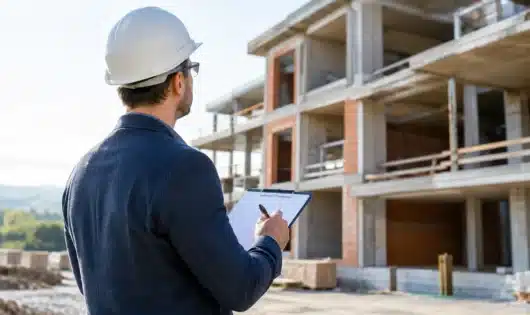
Checking a builder before buying: how to evaluate experience, documents and quality of execution to choose a property with long-term value and security.

A practical guide to selling inherited property: documents, agreement between heirs, price and a secure deal without unnecessary risks in today's transaction.