

Property market forecast for 2026.
Property market forecast for 2026: how interest rates, supply and property quality influence the decisions of buyers and investors in Sofia today.
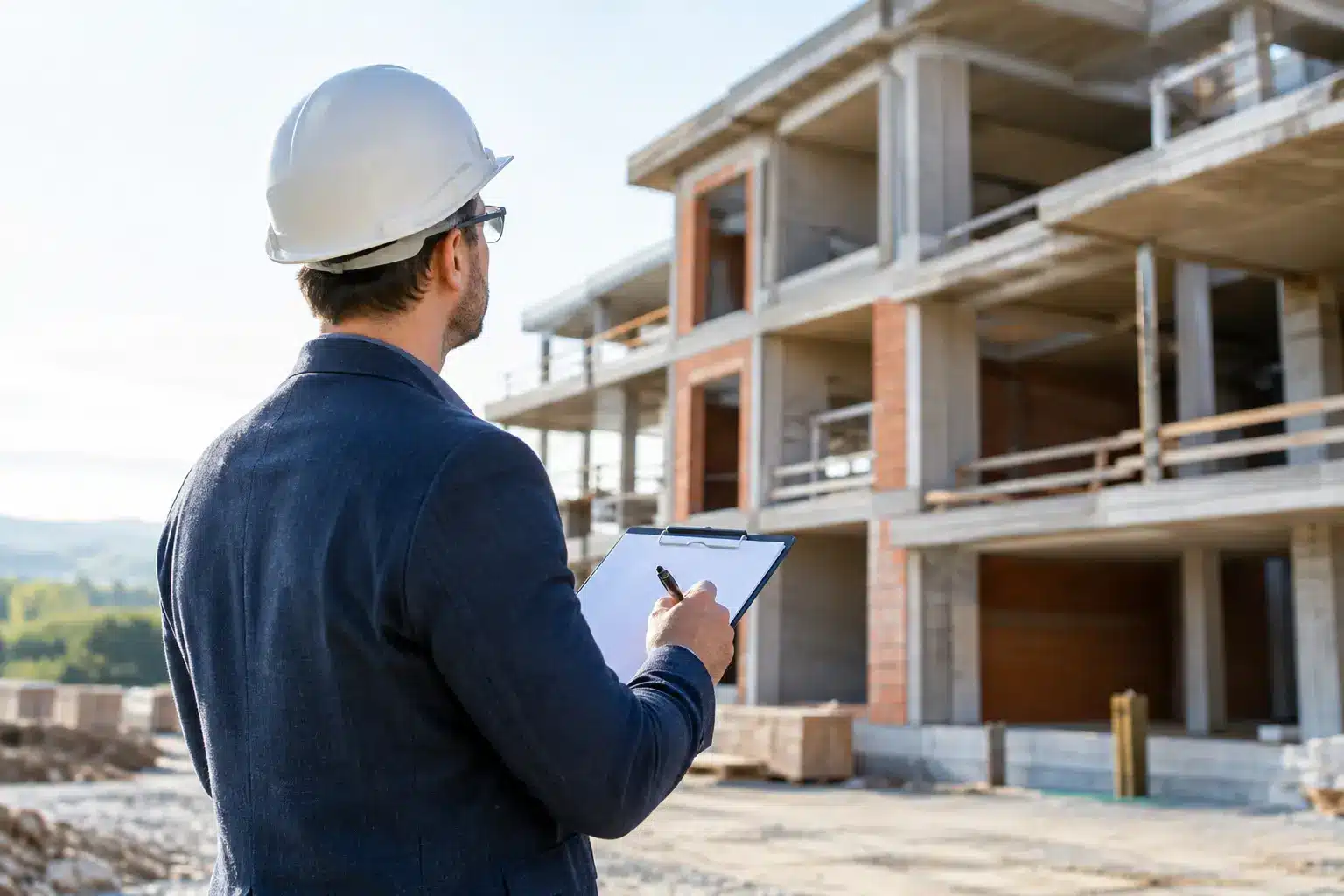
A new apartment may impress with its architecture, common areas, and view, but its value is also determined by decisions that are not visible at first glance. That's why a builder's inspection is a key step before a down payment, especially when buying a property under construction or a new building in which a community of owners is yet to be formed. It is not an expression of distrust, but a sensible way to protect your capital and your daily comfort.
With a premium property, expectations are justifiably higher. A high-class location, a quality interior design and a representative lobby cannot compensate for compromises with the construction, installations, building management or legal certainty. A good check combines facts from public registers, a review of documents, technical expertise and conversations with people who have already lived in properties of the same investor.
The first task is to establish who is actually behind the project. The advertising name of the complex does not always coincide with the legal entity that owns the land, constructs the building or sells the specific object. Request the exact details of the selling company, the investor and, where applicable, the main contractor.
Then look at the company's history. How long has it been in business? What buildings has it completed and delivered? Does it have experience in the segment and scale of the project you are considering? A small company with one successfully completed project is not necessarily a risky choice, but it does require a more in-depth assessment of financing, team, and contractual protections.
It is useful to visit at least two completed buildings of the same builder. Do not limit yourself to the facade. Pay attention to the condition of the entrance, flooring, elevators, maintenance of common areas and visible details on the facade. If possible, a conversation with the owners or the property manager often gives a more realistic picture than any advertising presentation. Ask whether the deadlines were met, how defects were removed and how the builder reacted after the handover of the building.
Reputation matters, but it shouldn’t be the only criterion. Even a recognizable name doesn’t negate the need to review the documents on a specific project. Conversely, a builder with less public history can offer excellent performance if ownership, permits, financing, and contract terms are clear.
When purchasing new construction The documentary review must be performed by a lawyer with experience in real estate transactions. The role of the broker is to organize the process, ask the right questions, and gather information in a timely manner, but the legal analysis should be independent and specific to the selected property.
The following key elements are typically reviewed:
In a building under construction, the terms and conditions for payment are of particular importance. Is the price fixed? At what objective stages are the installments due? What happens in the event of a delay? Is there a penalty that is actually applicable, not symbolic? A clear contract does not eliminate all risks, but it makes the consequences predictable.
If the project is financed with a bank loan, this is not automatically a problem. In many cases, bank financing is a sign of a successful due diligence. However, it is important for the lawyer to follow up on how the mortgage will be erased or released for the specific property in the final transaction. The buyer needs to know exactly what document he will receive and at what point.
These stages are often present in offers, but their meaning is rarely explained clearly enough. Act 14 certifies the acceptance of the structure and is an important boundary in the construction process. Act 15 is related to establishing the suitability for acceptance of the construction, and the occupancy permit or certificate of commissioning, popularly called Act 16, allows the legal use of the building according to its type.
Do not use these terms interchangeably. A property on Act 14 is different from a completed and commissioned property, both in terms of risk and in terms of financing, move-in capability and time to actual use. The price difference between the stages sometimes justifies an earlier purchase, but must be weighed against your tolerance for time and risk.
During the inspection, the buyer naturally notices flooring, doors, lighting and furniture. The more important issues are often hidden: what is the thermal insulation, how is the waterproofing of the roof and terraces solved, what is the type of window frames, how are the noise insulation and vertical installations implemented. Well-selected materials have value only if they are properly installed.
Ask for a technical specification. It should be specific enough to avoid any discrepancy between what was promised and what was delivered. Phrases like „high-end,“ „luxury performance,“ or „equivalent materials“ do not in themselves provide a measurable standard. Look for brands, models, specifications, or at least clearly described technical parameters for windows, heating, cooling, elevators, facade system, and common areas.
In the higher segment, building systems are crucial for the perception of quality. Individual or central heating, the presence of air conditioning, ventilation, access control, charging infrastructure and maintenance of common areas should be considered as part of the investment. A system that sounds prestigious but is expensive to service or difficult to manage can increase future monthly costs without corresponding benefit.
When a property is ready, it is wise to have a second inspection by an independent structural engineer or technical expert. They may notice cracks, traces of moisture, irregular terrace slopes, problematic joints, irregularities or discrepancies that remain out of the buyer's focus. This is a small expense compared to the acquisition price and is often the best time to negotiate a defect removal or price adjustment.
The value of the home also depends on the environment that will surround it in two or five years. Examine the zoning, neighboring plots and the possibilities for future development. The panorama, the silence or the free space in front of the building can change if the terrain opposite allows for a new project.
It is also important to understand how the building itself will function. How many apartments, garages and parking spaces are there? What is the access for guests and deliveries? Are there retail spaces on the ground floor that could change the traffic and character of the common areas? What is the expected management and maintenance budget? In serviced complexes, these questions are particularly important because the low purchase price is sometimes followed by significant ongoing costs.
For investors, the check also includes an assessment of liquidity. A quality builder, a good location, and a limited number of well-planned homes typically support more stable demand for resale and rentals. But an oversupply of nearby, similar projects can limit expected growth. Market analysis should be based on real transactions and competitive offers, not just stated bid prices.
The best approach is to start the inspection before booking, not after. First, determine which criteria are crucial for you: move-in time, capital security, profitability, architectural quality or the possibility of customization. Then, request the key documents and technical specifications, visit previous projects and commission the legal due diligence before signing any binding commitments.
Not every property requires the same depth of analysis. In an existing building, the focus is on condition, burdens, and quality of maintenance. In an early-stage purchase, the financial viability of the project, permits, timelines, and contractual mechanisms become the leading considerations. A personalized process is more valuable than a universal checklist.
At Kalos Estates, we consider the choice of builder as part of the larger decision for the property: its location, quality, future value and alignment with your personal goals. When the facts are verified in a timely manner, negotiations are conducted more confidently, and the purchase retains what a premium property should bring - peace of mind, not questions after the deal.
The best time to ask for clarity is before you've committed to a specific apartment. A well-asked question today can save you years of compromise tomorrow.

Property market forecast for 2026: how interest rates, supply and property quality influence the decisions of buyers and investors in Sofia today.

Buying or renting: how to compare real costs, freedom and long-term value before choosing a home or investment for your future.

A practical guide to selling inherited property: documents, agreement between heirs, price and a secure deal without unnecessary risks in today's transaction.